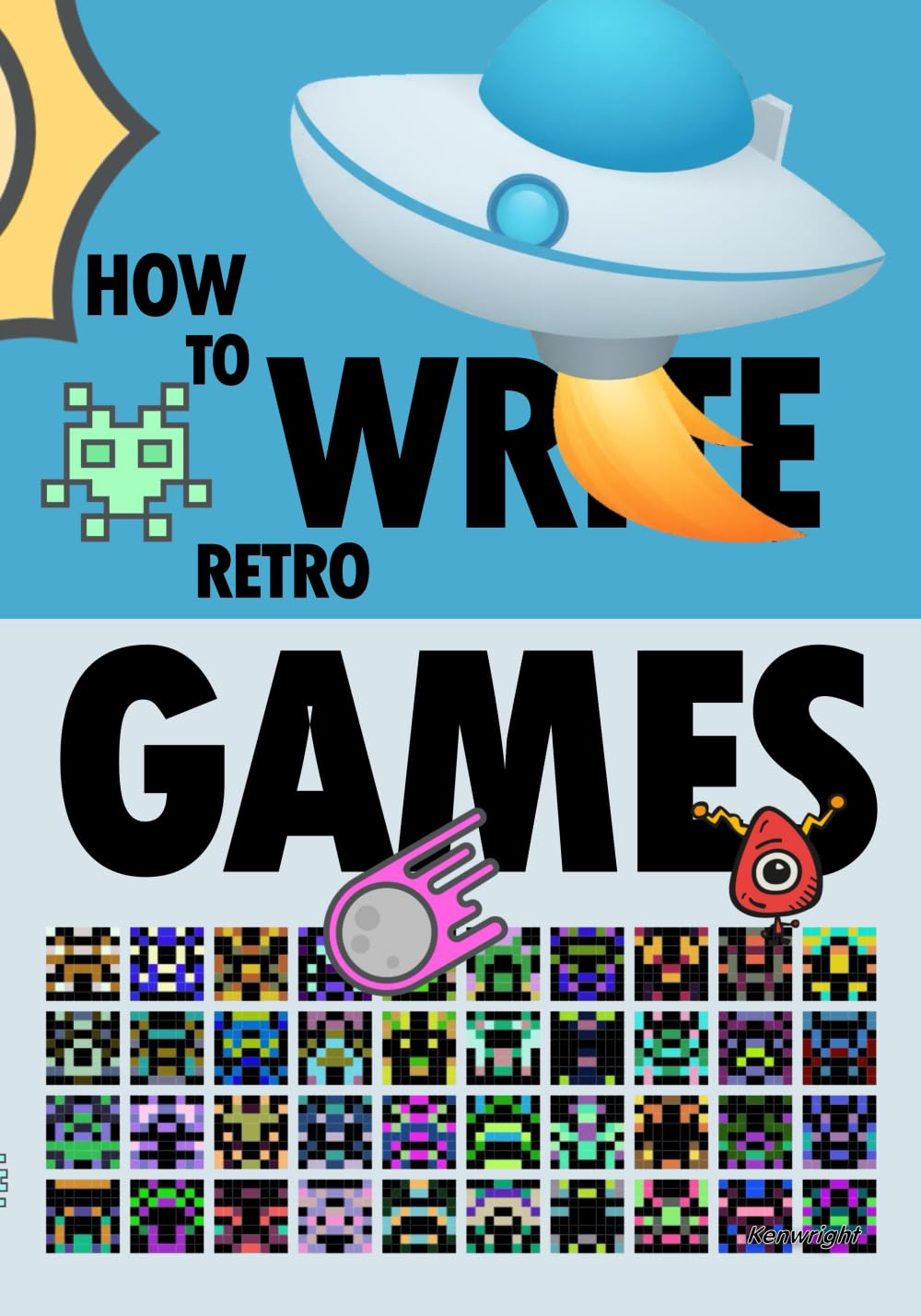
How to Write Retro Games - Web Programming (Paperback)
A groundbreaking work that transforms our understanding of the subject. This book has been acclaimed by critics and readers alike as a must-read masterpiece.
Book Description
In this compelling and insightful work, the author delves deep into the subject matter, providing readers with a comprehensive understanding that is both accessible and profoundly enlightening.
Key Features:
- Comprehensive coverage of all essential topics
- Real-world examples and case studies
- Practical applications and implementation guidance
- Interviews with leading experts in the field
- Actionable insights you can apply immediately
Whether you're a novice looking to understand the basics or an expert seeking advanced insights, this book offers value at every level. The clear writing style and thoughtful organization make complex concepts easy to grasp.
What You'll Learn:
- The fundamental principles that underlie the subject
- How to apply these principles in practical situations
- Advanced techniques used by professionals in the field
- How to avoid common pitfalls and mistakes
- Strategies for continued learning and mastery
Customer Reviews
4.8
based on 1,242 reviews

Emma Rodriguez
Book Blogger
"Fantastic read! Couldn't put it down. 5/5 stars!"

Dr. Lena Morales
AI Researcher
"This book came into my life at just the right moment. The themes in How to Write Retro Games - Web Programming (Paperback) resonated deeply with me, and I found myself reflecting on my own experiences. The author has a beautiful way with words that makes complex ideas accessible."

Dr. Lena Morales
AI Researcher
"How to Write Retro Games - Web Programming (Paperback) represents a significant contribution to the field. The author's meticulous research is evident throughout, with extensive references to both classical and contemporary works. The theoretical framework provides a robust foundation for the arguments presented, making this essential reading for scholars."

Dr. Aisha Rahman
Robotics Specialist
"Fantastic read! Couldn't put it down. 5/5 stars!"

Dr. Ingrid Novak
Quantum Computing Expert
"After spending considerable time with How to Write Retro Games - Web Programming (Paperback), I'm impressed by how the author balances depth with accessibility. The first three chapters establish a strong foundation, while the middle sections develop the core concepts with numerous practical examples. The final section synthesizes these ideas in a way that feels both surprising and inevitable—a hallmark of excellent structuring."
Reader Discussions

SigmaSeeker
Jul 3, 2026The pacing is ideal—dense enough to challenge, but never overwhelming. A masterclass in technical writing.

CyberSentience
Jul 5, 2026This book helped me rethink how I design systems for scalability and fault tolerance.

LogicLoop
Jul 11, 2026This book completely reshaped how I approach algorithm design. The author's clarity is unmatched.

VerseVoyager
Jul 19, 2026I keep this book on my desk—it’s my go-to reference for deep learning architecture design.

FractalThinker
Jul 10, 2026Perfect for brushing up on foundational concepts before tackling advanced AI models.

PageTurner
Jul 19, 2026The case studies are incredibly relevant and help ground the theory in real-world applications.

SigmaSeeker
Jul 16, 2026This book bridges the gap between theory and implementation better than any I've read.

SigmaSeeker
Jul 15, 2026I've recommended this to every colleague in my lab. Essential reading for anyone working in machine learning.

StellarSynth
Jul 20, 2026Perfect for brushing up on foundational concepts before tackling advanced AI models.

WarpVector
Jul 14, 2026The writing style is technical but never dry. It keeps you engaged while challenging your thinking.

VerseVoyager
Jul 11, 2026Every chapter ends with exercises that actually reinforce learning—rare and valuable.

PrimeFactor
Jul 2, 2026This book helped me rethink how I design systems for scalability and fault tolerance.

BookLover42
Jul 4, 2026The case studies are incredibly relevant and help ground the theory in real-world applications.
Join the Discussion
Related News
You May Also Like
Ray-Tracing with Vulkan - Owners' Workshop Manual - Computer Programming (Beginners Onwards) (Paperback)
by AuthorBook Statistics
Find This Book On
Awards & Recognition
- #1 Bestseller in Category
- Editor's Choice Award 2023
- Reader's Choice Award
- Book of the Month Selection